March
7,
2011
By:
Cooper-Hewitt N. from New York, NY
An important part of brainstorming are the wild ideas. It is always hard for everyone to loosen up to truly think of 'wild' ideas. French illustrator, Villemard, created these beautiful drawings of his vision of the year 2000. Ideas included flying firemen and robots that assist architects. These might seem wild even for today, but if you read the article he was not too far off.
READ MORE |
|
 SHARE SHARE
|
March
7,
2011
By:
Cooper-Hewitt N. from New York, NY
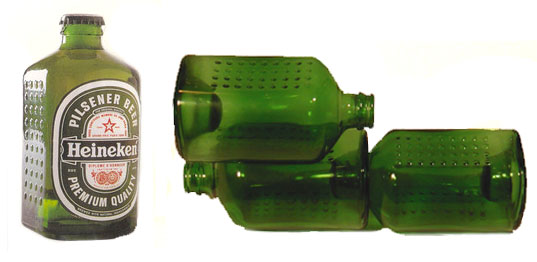
What a smart idea that's a blast from the past. Why recycle when you can re-use a design for the great purpose of creating a home. Click here for the entire article.
READ MORE |
|
SHARE
|
February
23,
2011
By:
Cooper-Hewitt N. from New York, NY
Designing the school day around discovery of information, connections to real world challenges are just a few of the topics IDEO's Sandy Speicher speaks about in her article.
READ MORE |
|
SHARE
|
February
17,
2011
By:
Cooper-Hewitt N. from New York, NY
Metropolis Magazine put out a great Q&A; article on how nature can inform design. You can read a bit of the introduction paragraph below. Click here for the entire article.
“We are nature.” So goes the new mantra in some design circles. And the word “biomimcry” comes up with increasing frequency. When we heard that Jane Fulton Suri, a partner and creative director at IDEO and author Thoughtless Acts? Observations on Intuitive Design, is working to reconcile nature with design, we couldn’t resist asking her a few questions.

READ MORE |
|
SHARE
|
February
14,
2011
By:
Cooper-Hewitt N. from New York, NY
GOOD magazine put out another great article.
Here is a portion the article; click here to read the rest.
"Most students have little awareness of design as its inclusion in school curricula is all too rare. To remedy that, Worldstudio and Adobe partnered to created Design Ignites Change, a program that encourages high school and college students to use design thinking and innovation to develop projects benefiting their own communities."
READ MORE |
|
SHARE
|
January
28,
2011
By:
Cooper-Hewitt N. from New York, NY
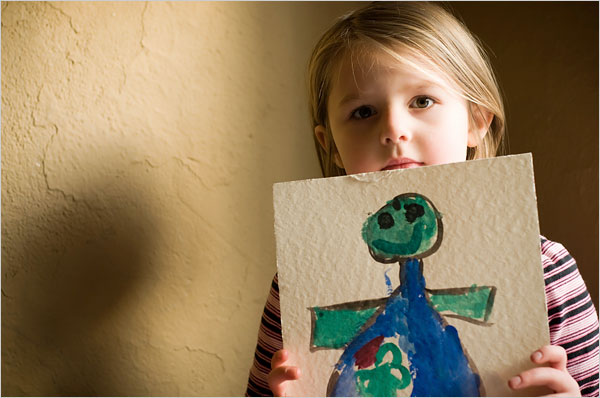
The New York Times put out a great article about what to do with all of your kids art work and if it is too harsh or the right thing to do when it comes to curating your kids artwork on the refrigerator. Read the article here.
READ MORE |
|
SHARE
|
January
28,
2011
By:
Cooper-Hewitt N. from New York, NY
No Right Brain Left Behind is challenging some of the best from the creative industry to look at the status of education in this country and how it can be improved. Below is a description of the challenge from Core 77.
In conjunction with the global events coordinated for Social Media Week 2011 a group of creative agency-types have thrown down the gauntlet, challenging their peers to concept ideas to address the "creativity crisis" within the US education system over the course of the week. No Right Brain Left Behind is using this interesting media moment and giving teams of designers, agencies and consultancies an opportunity to enact some change within a local community.
READ MORE |
|
SHARE
|
January
24,
2011
By:
Cooper-Hewitt N. from New York, NY
With Photoshop, CAD and animation software it is easy for a design student to forget the pencil to paper feeling and the importance of drawing. The well known design firm Pentagram has put out a video with Daniel Weil speaking about the importance of drawing as a way to generate and visualize design ideas. This might help remind your students that they still need to practice those life drawing skills no matter what design field they enter.
Daniel Weil: Drawing the Process from Pentagram on Vimeo.
READ MORE |
|
SHARE
|
January
24,
2011
By:
Cooper-Hewitt N. from New York, NY
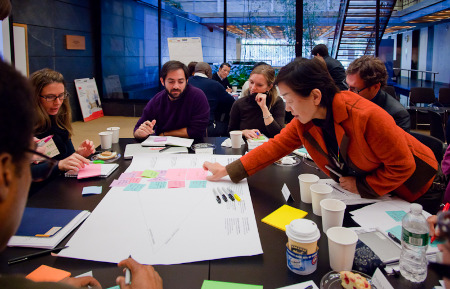
GOOD joined a charrette focusing on how designers and the design process cab work more effectively with a community.
Check ou the article here.
READ MORE |
|
SHARE
|
January
20,
2011
By:
Cooper-Hewitt N. from New York, NY
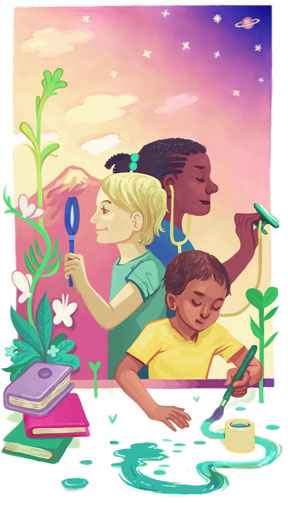
Doodle 4 Google is a competition that invites K-12 students to use their artistic talents to think big and redesign Google’s homepage logo for millions to see. This years theme is, "What I’d like to do someday…"
One lucky student artist will take home a $15,000 college scholarship and $25,000 technology grant for their school, among many other prizes.
We hope some of your students will enter their designs.
Registration closes at 11:59:59 p.m. Pacific Time (PT) on March 2, 2011, and entries must be postmarked by March 16, 2011 11:59:59 p.m. Pacific Time (PT). The winning doodle will be featured on our Google.com homepage on May 20, 2011.
READ MORE |
|
SHARE
|